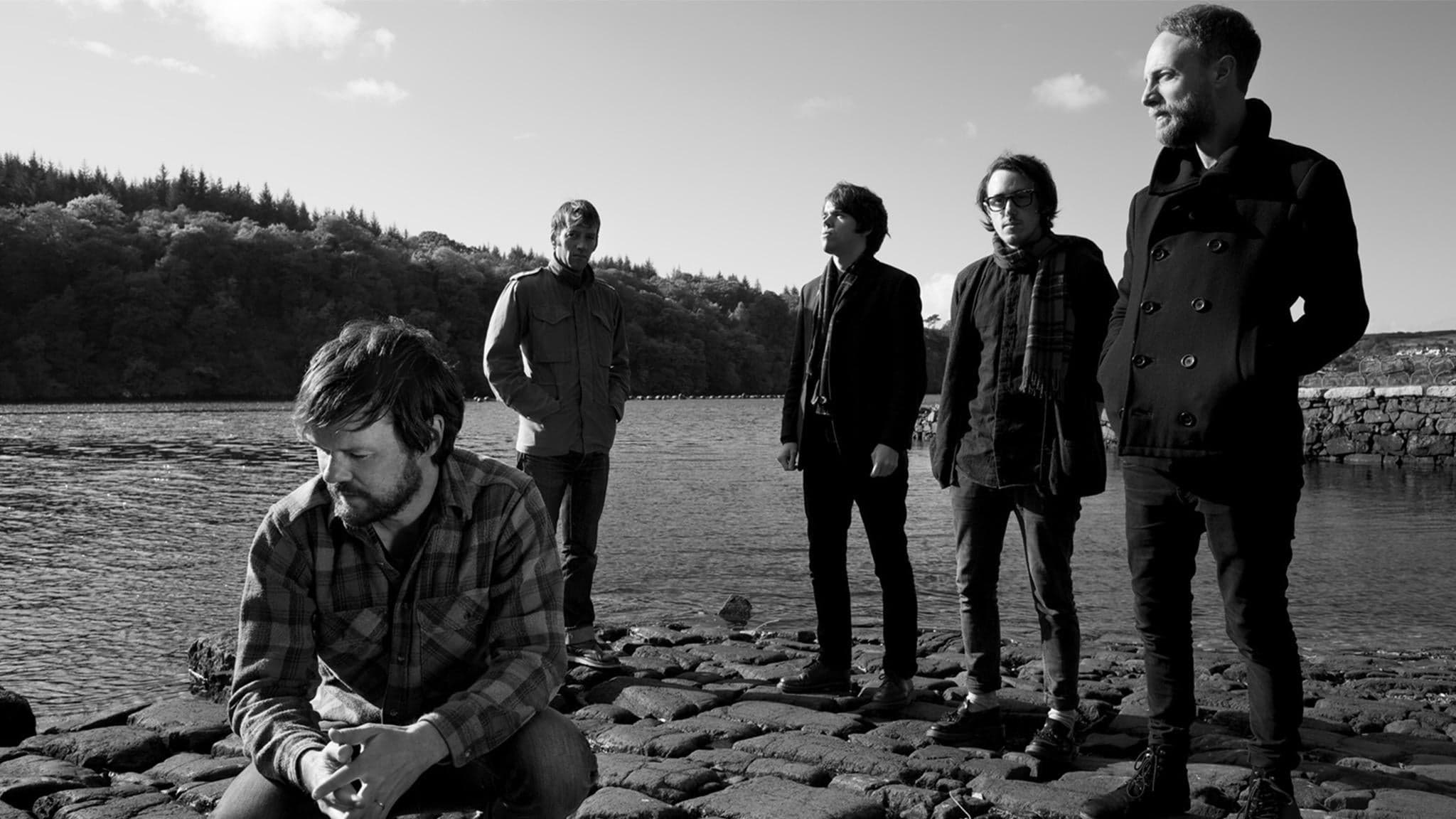
idlewild. plus support
About this event
eastside present idlewild plus guests Friday 17th April 2026 Sunderland - Fire Station Doors 7pm Idlewild’s self-titled 10th album begins in medias res, with Rod Jones’ guitar crunching and wailing, the sound hanging in the air until vocalist Roddy Woomble catches hold of it with the first of lead single Stay Out of Place’s fizzing, inimitable hooks. Immediately, there is the sense of a band in motion, their storied past not an anchor but a spur as they trace the twists and turns of a three decade career in order to understand what makes them tick in the here and now. “Everything adds up to the present moment, doesn’t it?” Woomble asks, and Idlewild’s songs offer a string of compelling answers. Since forming in Edinburgh in 1995, Idlewild have been a lot of different things. They were a teenage punk band, slinging buzzsaw riffs and barbed refrains on their seminal early records Hope Is Important and 100 Broken Windows, before becoming one of the most compelling mainstream rock groups of their generation with The Remote Part, an album that debuted at number three on the UK charts behind Oasis and Red Hot Chili Peppers in 2002. On either side of a 2010 hiatus, which allowed them to branch out along fresh creative avenues, from solo albums to production work for other bands, they made widescreen indie-rock, ruminative folk-rock and, with 2019’s thrillingly inventive Interview Music, sprawling art-pop. On Idlewild they welcome each of these past selves into the room, interrogating formative sounds with the vigour and curiosity of kids geeking out over Fugazi and R.E.M. while simultaneously exploring texture and harmony through the sort of road-worn chemistry that you can’t fake. As Woomble succinctly puts it, they sought out “big ideas, deep uncertainties, memorable tunes.” “We’re looking back without being nostalgic — we were thinking about all the songs we’d made and the new songs we were making,” he observes. “For the first time we were referencing ourselves, not in a nostalgic way, in a positive, creative way, realising that we had a ‘sound’ and the songs we were writing should celebrate that. After it was all recorded and done, it felt fitting to simply title it Idlewild.” Work on a follow up to Interview Music was initially planned to begin immediately after the band — completed by founding drummer Colin Newton, bassist Andrew Mitchell and keyboard player Luciano Rossi — wrapped up touring on the record. They already had a fistful of decent tunes when the pandemic happened, putting things into a skid for a few years. With members dotted all over it took another timely reminder of old glories to bring them back together and hit reset — they toured the 20th anniversary of The Remote Part in 2022 and found it to be a visceral reminder of all the places they’d been and a stirring prompt as to where they might go next. “You do those shows, and it reinvigorates you,” Jones says. “You see what those records mean to people and what it is that they connect with about the band. We didn’t want to make a record that was backward-looking, it was more about realising what we’re good at and where it resonates, taking that forward with newer members who have their own influences in what they bring, and trying to be collaborative in that way.” When they reconvened in 2024, Idlewild found that they’d all turned the same page. They assembled songs that celebrated their bone-deep love of pop hooks and livewire distortion as readily as they shone a light on the increasingly expressive tonal interplay introduced by Mitchell and Rossi, with elegiac moments such as The Mirror Still seeking to understand how Interview Music’s searching nature might work within the confines of a three minute indie-rock song. “It’s good to explore your limits; what you can do within a framework,” Woomble suggests. “I think it shows that we are always trying to push ourselves with what we can do, against the other things that we can do.” Writing went on in this way throughout the year at Jones’ Post Electric studio in Edinburgh and the Isle of Iona Library in the Hebrides, close to Woomble’s home, before a short, sharp burst of recording early in 2025 set things in stone. In only a few weeks Idlewild laid down a lean, focused document — 10 tracks that get in and out in 30 minutes and change — that captures all they’ve learned under one banner. “It felt really natural,” Newton says. “We didn’t fight the things that happened. It was spontaneous.” With Jones engineering and mixing the record on his home turf, there was a collaborative in-house approach to production that worked perfectly given the self-reflective gaze of the material. Often, on songs such as the driving Like I Had Before, there is the sense that we’re hearing ideas from twentysomething Idlewild being arranged by fortysomething Idlewild, their rough edges enhanced by poise and certainty that wasn’t available to them way back when. “When we were making those records, we were so green,” Jones says. “I guess with age and experience, rather than wisdom, we’ve learned how to feel confident enough in the studio to do what we want to do.” Duly, it’s rare to find a record that pulls together its thematic preoccupations and musical impulses so concisely, with Idlewild finding beauty and nuance in the short spaces between Woomble’s lyrics and arrangements that intuitively play off his ruminations on legacy, impermanence and feelings of isolation. Make It Happen’s slashing riff — not to mention a secondary chorus most bands would build a whole song around — helps to encapsulate the frustration and euphoric release of touring found in Woomble’s words, while the faultlessly melodic It’s Not The First Time taps into the wistful side of The Remote Part as he reflects upon memory as “a broken net, a leaky barrel”. “I don’t tend to write songs about things — the music, to me, gives the words meaning,” Woomble says. “But I do think that if there is something that characterises a lot of Idlewild’s songs it is this search for somewhere to belong. I’m always looking onto something rather than actually being part of it, and that’s very much because I moved around a lot when I was younger. As an adult, obviously, I’ve been transient with music. In many ways it’s the reason I am an artist — there’s always somewhere else to go, where you can explore who you are.” As they did back in the late 1990s, Woomble’s explorations while working on Idlewild took him out with a camera around his neck, looking for an image that reflected back all they’d worked to express. “The artwork for our first albums and singles shared an aesthetic,” he reflects. “Mainly my photos, or photos by my friend Ian Ritterskamp, that were vague yet purposeful, romantic yet meaningless.” He found what he was looking for in a familiar spot: the exact location he took the sleeve photo for Hope Is Important. Crucially, though, he faced in the other direction, away from the past and into the future, replacing its sepia tones with a vibrant wash of colour.
See ticket prices on Ticketmaster
Free